Cities keep growing, and moving people through them keeps getting harder. Congested corridors, poor air quality, fuel bills rising faster than fare revenue, bus systems running well past the capacity they were designed for. For decades the standard response was to build more road: wider carriageways, more flyovers, another ring road. That helped, but road capacity has never kept up with how quickly cities add people and trips.
The question has changed. It used to be how much more road can we build. Now it is how many more people can we move on the roads we already have. Most credible answers point back to public transport, and increasingly to electric buses.
Electric buses are past the pilot stage. Agencies are buying them at scale because they take tailpipe emissions out of the most crowded parts of the city, they run quietly, they cost less per kilometre once fuel and maintenance are counted, and passengers actually prefer them.
India’s numbers show how fast this has moved. Under the PM e-Bus Sewa scheme, 10,000 electric buses have been sanctioned across 116 cities in 26 states and union territories, one of the largest e-bus programmes anywhere. The scheme also funds charging infrastructure and depot development. That detail matters more than it looks, because it is an official acknowledgement that the vehicle is the easy part.
Buying buses is where electrification starts, not where it succeeds. What decides whether a fleet still performs in year four is everything around the bus: how it charges, how the depot is run, what data the operator actually uses, and how quickly a vehicle gets back on the road when something fails.
The shift towards sustainable urban mobility
The United Nations expects close to 70% of the world’s population to be living in urban areas by 2050. The International Energy Agency counts road transport among the largest sources of transport-related greenhouse gas emissions. Put those two together and the pressure on city bus systems is only going one way.
An electric bus deals with more than one of those problems at once. It has no tailpipe, so it removes a source of particulate matter and NOx from exactly the streets where people are densest. It is quieter, which matters on a route that runs past housing at six in the morning. And because the powertrain is electric and connected, an operator can finally see what each vehicle is doing instead of reconstructing it from logsheets a week later.
More than a vehicle replacement
The most common mistake is treating electrification as a like-for-like swap. Same depot, same rosters, same maintenance routine, different fuel. It never works that way.
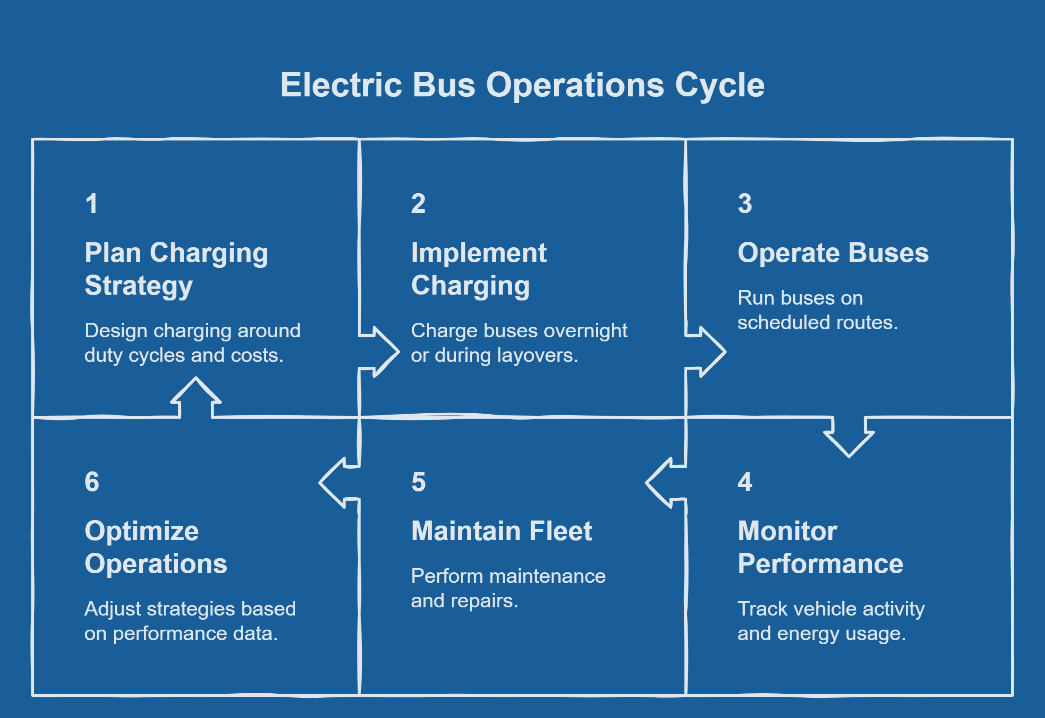
An electric fleet forces decisions the operator has never had to make. When does each bus charge, and at what tariff. How much energy does this route actually need in June with the air conditioning running flat out. Who diagnoses a battery fault at eleven at night. How is the depot laid out so fifty buses can charge without tripping the connection. Every one of those questions ties back to the others.
Cities that procure vehicles first and think about the rest later tend to find out the hard way, through availability figures that never reach the contracted level. The ones that plan the whole system upfront run higher uptime and spend less per kilometre across the life of the fleet.
Charging decides almost everything
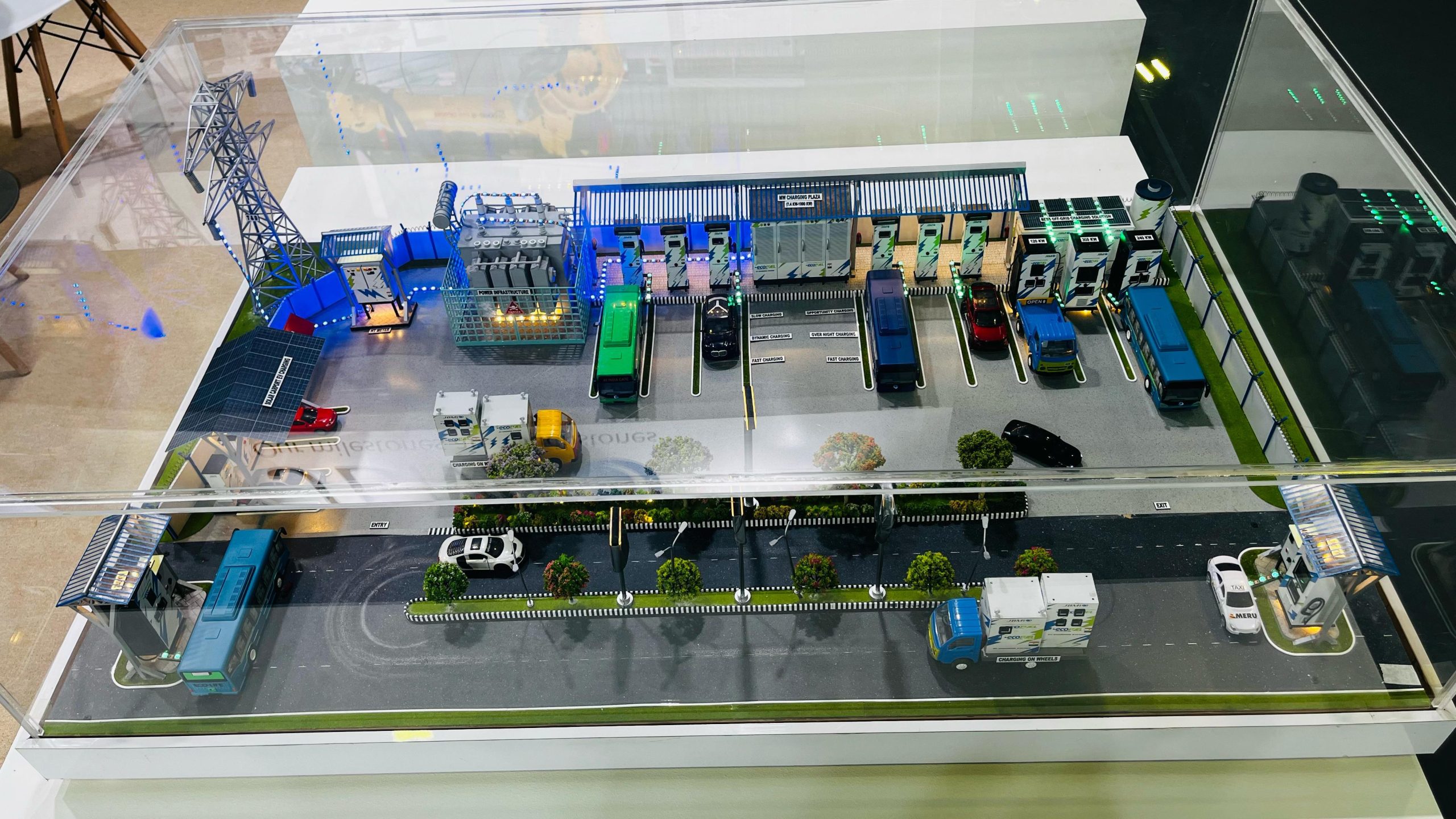
Charging is where most e-bus programmes are won or lost. The instinct is to buy the fastest charger on the market. The better approach is to design charging around the actual duty cycle: when buses return, how long they sit, what the sanctioned load at the depot is, and what a unit of electricity costs at two in the morning compared with two in the afternoon. Two approaches dominate.
Depot charging
Buses come back after their scheduled duty and charge overnight or between shifts. It keeps everything in one place, uses cheaper off-peak power, and keeps the electrical build simple because you do it once, at one site. Maintenance teams like it for the same reason. For a city running fixed routes on a fixed timetable, depot charging covers most of what is needed.
Opportunity charging
Here buses top up at terminals or major stops during layovers. It stretches operating hours and allows a smaller battery on board, which brings weight down and passenger capacity up. The trade-off is more charging hardware in more locations, and route planning that is far less forgiving. Miss a layover window and the schedule slips behind it all day.
Which one fits depends on route length, operating hours, land available at the depot, and what the local utility can actually supply. Large fleets usually end up with a mix of both.
Batteries are one variable, not the whole answer
Battery capacity gets most of the attention in tenders and most of the argument in evaluation meetings. It is not the number that determines cost per kilometre.
How the pack behaves thermally through an Indian summer, how many cycles it survives over eight years, how it accepts charge at a high state of charge, how it is serviced, what it is worth at the end of the contract: all of that matters as much or more. Lithium iron phosphate has become the default chemistry for buses because it holds up thermally, lasts through a lot of cycles, and behaves predictably in a fault, which is what you want on a vehicle carrying forty people.
Certified range is a laboratory figure. Real consumption moves with traffic, passenger load, gradient, ambient temperature, and how hard the air conditioning is working. A bus rated for 300 km can deliver a good deal less on a congested route in May. Build the roster from operating data on comparable routes rather than brochure specifications and the schedule holds.
What the data changes
A modern electric bus produces a continuous stream of operating data: state of charge, battery health, energy per kilometre, fault codes, charger utilisation, driver behaviour, position, and whether the service is running to time.
Used properly, that changes how a depot is run. Predictive maintenance catches a failing contactor or a drifting cell before it strands a bus mid-route. Route-level energy data shows which schedules are consuming more than they should, and usually points at either a driving pattern or a charging window that needs adjusting. Driver scorecards, used for coaching rather than punishment, typically move consumption by a few percent, which on a hundred-bus fleet is real money.
Once a fleet crosses a couple of hundred buses, nobody can run it off a whiteboard in the depot manager’s office. The software stops being optional.
Smart charging and the depot’s power bill
Plugging in is not the same as managing energy. A hundred-bus depot can draw several megawatts if everything charges at once, and demand charges on that peak can rival the cost of the energy itself.
Smart charging sequences sessions against departure times, current state of charge, tariff slabs, and the sanctioned load at the site. Buses leaving at five in the morning charge first. Buses on a late duty wait for the cheaper slab. The peak flattens, chargers get used more evenly, and the depot can add vehicles without immediately paying for a bigger connection. That last point is what makes a fleet scalable.
Passengers notice
Technology does not fill buses. Reliability does, and after that, comfort.
Electric buses help on both counts, though not automatically. The cabin is quieter and there is no diesel vibration at idle, so a conversation or a phone call is possible. Acceleration is smooth, which standing passengers feel more than anyone. Newer vehicles come with low-floor entry, wider doors, information displays that work, and climate control that keeps up in summer. Make the service reliable, add those things, and ridership follows. Ridership was the point all along.
The ecosystem around the bus
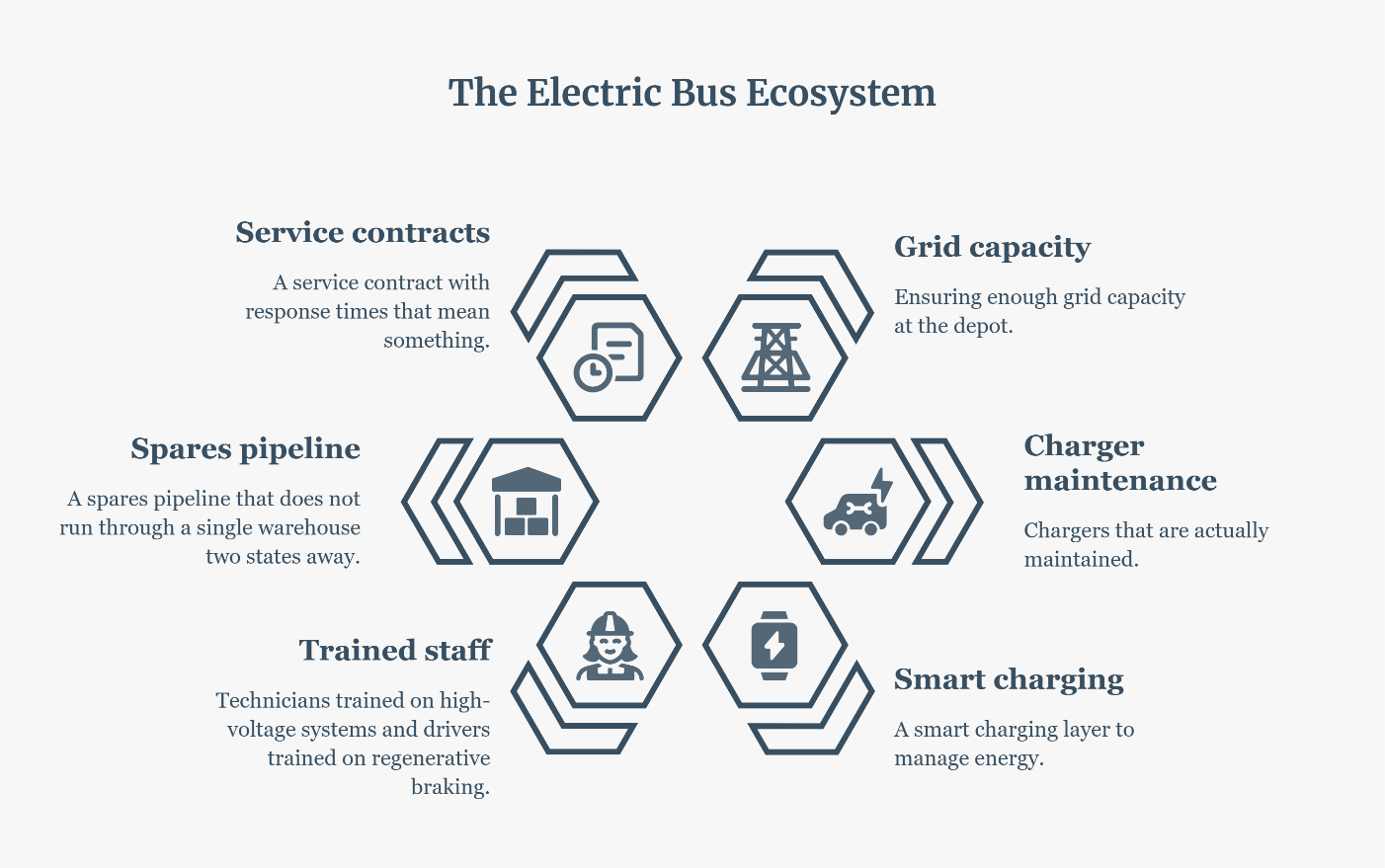
Cities that have electrified successfully all did the unglamorous work. Enough grid capacity at the depot. Chargers that are actually maintained. A smart charging layer. Technicians trained on high-voltage systems and drivers trained on regenerative braking. A spares pipeline that does not run through a single warehouse two states away. A service contract with response times that mean something.
Leave any of these weak and it shows up in the availability figures within a year. Charger uptime and spare parts are usually the first to bite.
Frequently asked questions
Why are cities investing in electric buses?
Mainly air quality and running cost. An electric bus removes tailpipe emissions from the most crowded parts of the city and costs less per kilometre once fuel and maintenance are counted. Lower noise and a better ride are secondary reasons, and climate commitments give the whole thing political backing.
Are electric buses suitable for all cities?
They work in most urban operations. What changes from city to city is the configuration. Battery size, charging strategy, and depot layout depend on route length, duty hours, terrain, and how much power the depot can draw.
What is the biggest challenge in electric bus deployment?
Rarely the vehicle. Usually it is power at the depot, followed by charger uptime and trained maintenance staff. Sanctioned load and grid connection timelines have held up more projects than battery technology ever has.
Which charging method is commonly used for electric buses?
Depot charging, in most cities. Buses charge overnight or between shifts at a single site. Opportunity charging at terminals gets added for high-frequency or long routes that cannot complete a day’s duty on one charge.
How do digital technologies improve electric bus operations?
Fleet platforms report state of charge, battery health, energy per kilometre, faults, and charger use while the fleet is running. That supports predictive maintenance, tighter charging schedules, and driver coaching, all of which push availability up.
Why is charging infrastructure as important as the buses themselves?
A bus that cannot charge on schedule does not run. Charging capacity sets how many buses can be dispatched each morning, and charging design sets the depot’s electricity bill and how easily the fleet can grow.
What should transport authorities consider before electrifying their bus fleets?
Route and duty data first. Then depot power availability, charging design, battery specification for local conditions, maintenance capability, fleet management software, and the terms of the service and spares contract.
What is the future of electric buses in India?
Volumes keep rising, driven by PM e-Bus Sewa and state programmes. The bigger shift over the next few years will be operational, as cities learn to run electric fleets well rather than simply procure more of them.
Frequently asked questions
Why are cities switching to electric buses?
Electric buses remove tailpipe emissions from the most congested parts of a city, run quietly, and cost less per kilometre once fuel and maintenance are counted. Passengers also consistently prefer them, which helps ridership.
How many electric buses has India sanctioned under PM e-Bus Sewa?
Under the PM e-Bus Sewa scheme, 10,000 electric buses have been sanctioned across 116 cities in 26 states and union territories - one of the largest e-bus programmes anywhere in the world.
Does PM e-Bus Sewa cover charging infrastructure as well as buses?
Yes. The scheme funds charging infrastructure and depot development alongside the vehicles, which is an official acknowledgement that the bus itself is the easy part of electrification.
What does it actually take to make an electric bus fleet work?
Buying buses is where electrification starts, not where it succeeds. Charging infrastructure, depot design, energy management and day-to-day fleet operations are what decide whether a fleet still performs reliably in year four.
Are electric buses cheaper to operate than diesel buses?
On a per-kilometre basis they generally are, once fuel and maintenance costs are included. Electric drivetrains have fewer moving parts and lower energy costs, which improves total cost of ownership over the life of the fleet.