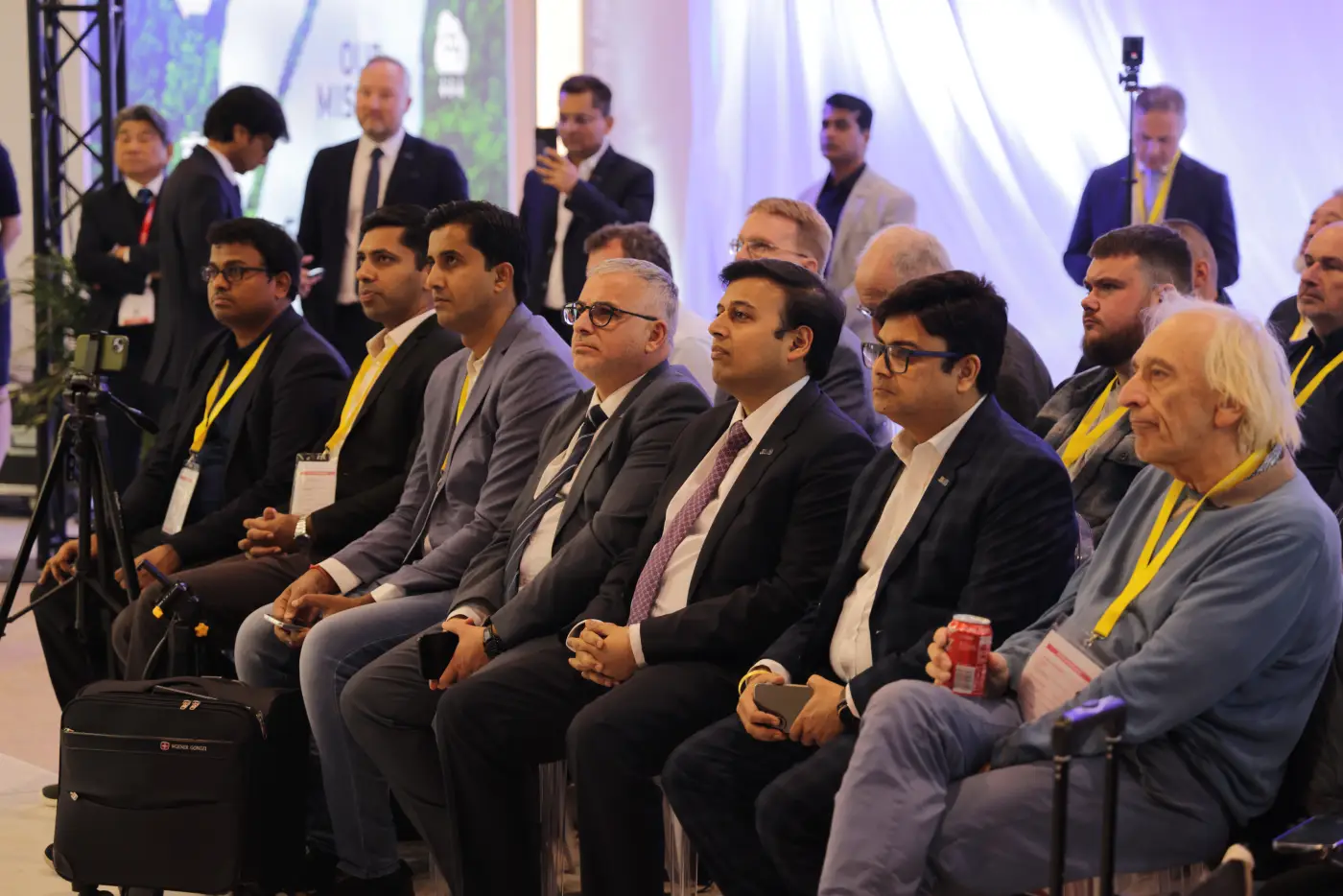
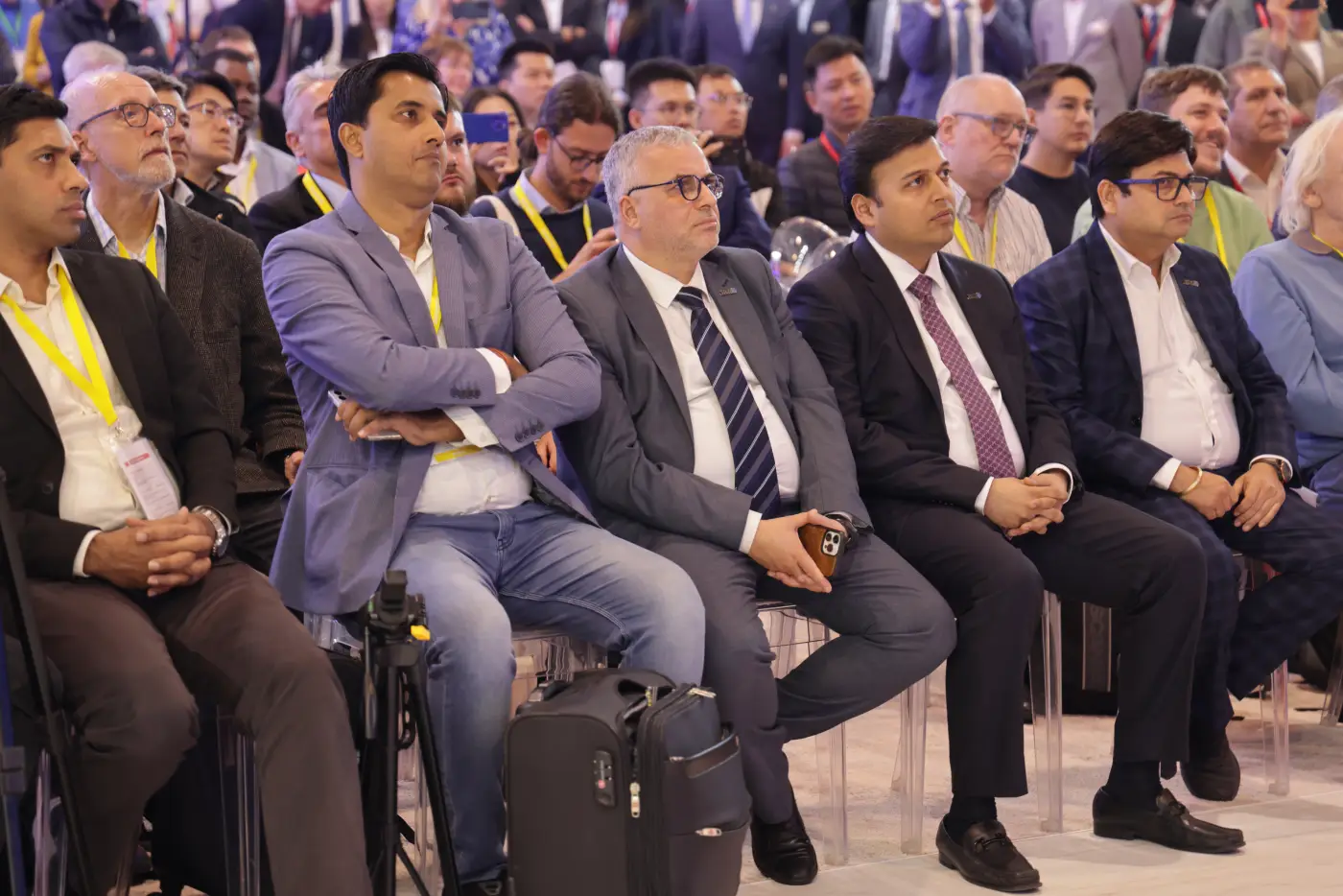
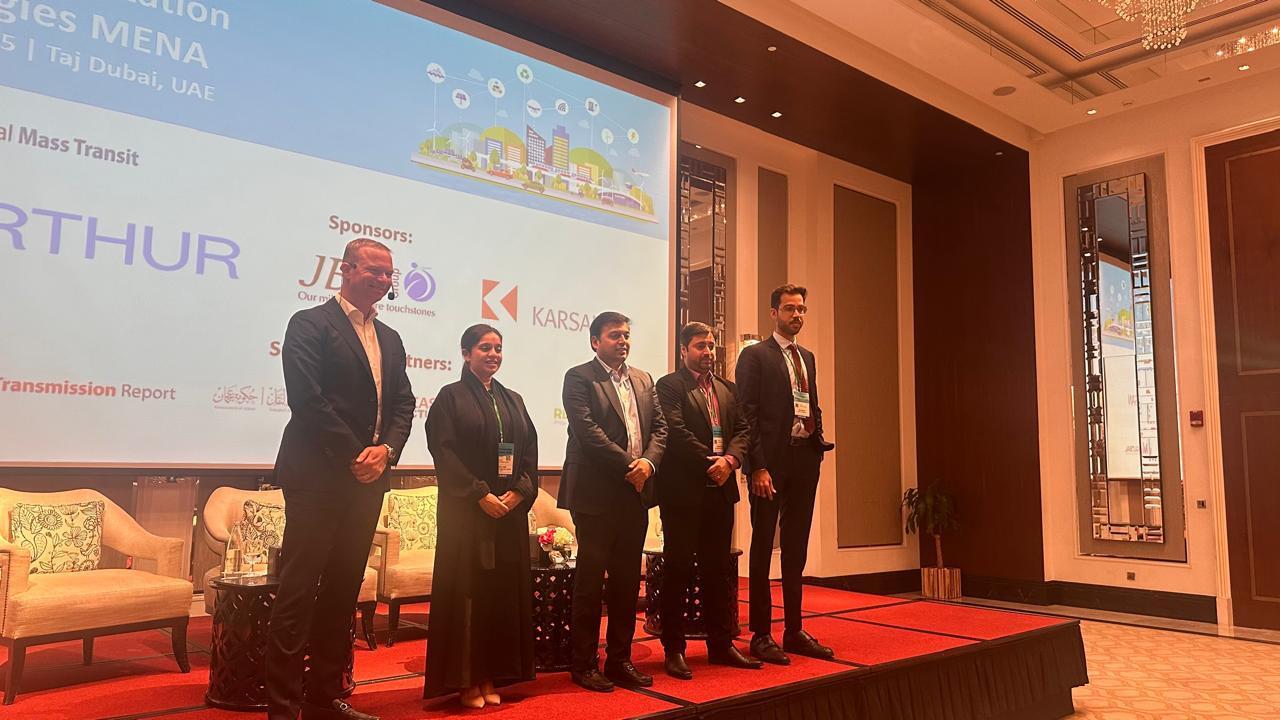
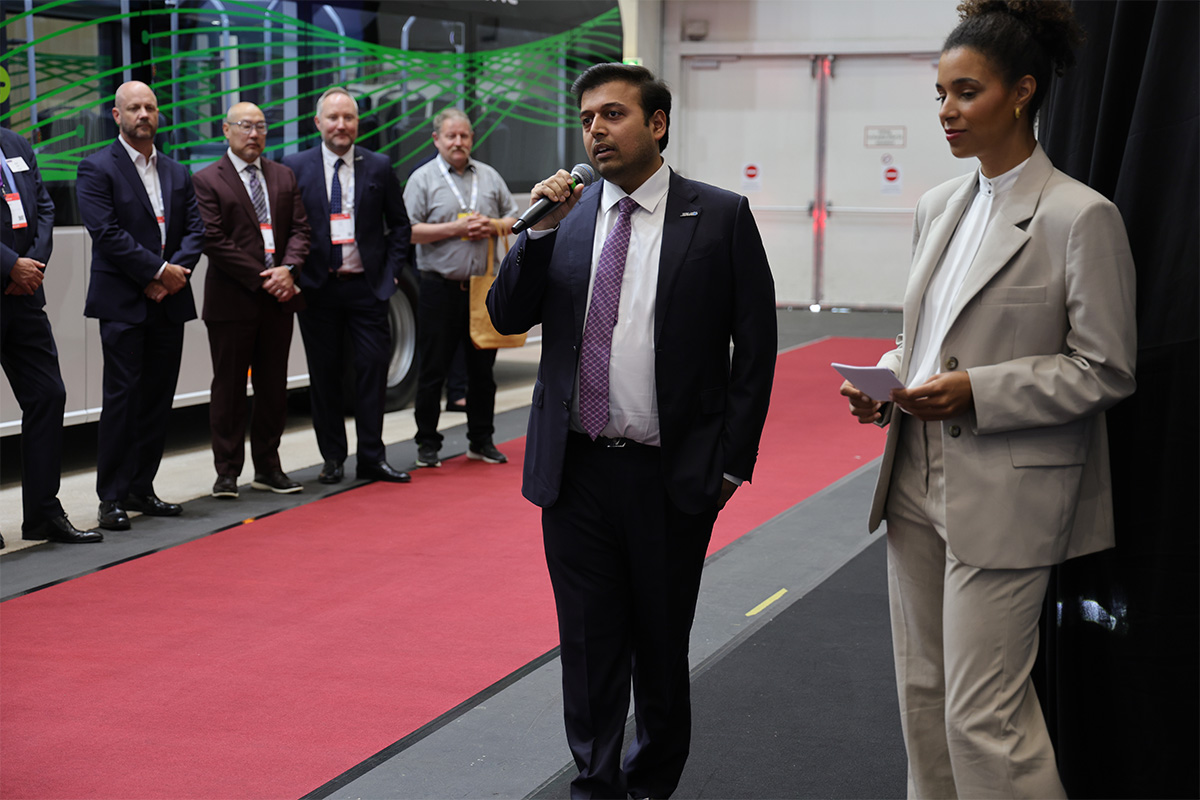
Vikrant Shrotriya, Corporate Vice President and Managing Director, Novo Nordisk India; Prashant Tandon, Co-founder & CEO, Tata 1mg; Arpita Vinay, Senior Managing Director & CEO, Spark Capital PWM; Praveena Rai, MD & CEO, Multi Commodity Exchange of India; S. Paramasivan, Managing Director, Afcons Infrastructure; and Nishant Arya, Vice Chairman & MD, JBM Group, in a session moderated by Ayesha Faridi, Executive Editor, ET NOW
Facebook
Twitter
LinkedIn
Email
WhatsApp
The Times Group presents ET Now Global Business Summit 2026. It was time for a sweeping conversation on India’s economic resilience in an uncertain world. The Resilient Core: Balancing Domestic Momentum with Global Volatility, moderated by Ayesha Faridi, Executive Editor, ET NOW, the panel brought together leaders from healthcare, capital markets, technology, infrastructure and clean energy—each offering a distinct lens on how India can sustain growth amid global turbulence.
For Vikrant Shrotriya, Corporate Vice President and Managing Director of Novo Nordisk India, resilience begins with health.
“India has demonstrated that it can eradicate and effectively manage many diseases,” he said. “But as our population ages, the burden of chronic illnesses such as diabetes, cardiovascular diseases and cancer is rising steadily.”
While India already supplies high-quality, globally compliant therapies—particularly in areas such as insulin—at unmatched affordability, the next frontier, he argued, lies in early detection. “The larger challenge now is improving screening, diagnostics and timely access to care,” Shrotriya noted. As the “pharmacy of the world,” India has earned trust in manufacturing. “The next step is to evolve into an innovation hub—leading in research, new drug development and advanced diagnostics.”
Health, in turn, underpins productivity. Prashant Tandon, Co-founder and CEO of Tata 1mg, framed it plainly: “A healthy population is the foundation of a strong and resilient economy.”
As incomes rise and awareness grows, demand for better healthcare is accelerating. Digital platforms, telemedicine, AI-enabled diagnostics and remote monitoring, he said, are transforming care delivery. Crucially, these advances are not confined to premium segments. “Digital healthcare has the potential to bridge gaps in access and make quality care inclusive rather than exclusive,” Tandon emphasized.
If health is one pillar of resilience, capital is another. Arpita Vinay, Senior Managing Director and CEO of Spark Capital PWM, pointed to a structural constraint.
“In a country with abundant land and labour, capital is often the limiting factor,” she said. Financial institutions, therefore, play a pivotal role in channeling savings into productive investment. Strong, transparent capital markets enable long-term financing, fuel entrepreneurship and direct domestic and global capital into infrastructure, manufacturing and innovation. “Efficient capital allocation is essential to sustaining India’s growth momentum,” she added.
Technology and trust form the next layer of resilience. Praveena Rai, MD and CEO of Multi Commodity Exchange of India, described the coming decade as defining for India’s IT services sector.
“In an era of heightened geopolitical uncertainty, technology, data and digital infrastructure are intertwined with national security and economic resilience,” she observed. Policy measures aimed at strengthening competitiveness and localising demand, she argued, are timely. Domestic digital adoption and enterprise digitisation will help reduce over-dependence on a few global markets. “What will ultimately matter is execution—scaling capabilities, building talent and aligning policy with industry.”
Infrastructure, meanwhile, remains the backbone of growth. S. Paramasivan, Managing Director of Afcons Infrastructure, highlighted the sustained rise in infrastructure allocation over the past decade.
“Even after COVID, infrastructure has remained a key focus area,” he said, pointing to its dual impact—boosting productivity while generating employment at scale. Investments in roads, railways, ports, airports and digital networks are enhancing connectivity, reducing logistics costs and laying the foundation for balanced development. “This sustained push is building long-term economic capacity,” Paramasivan noted.
Finally, the clean energy transition presents both challenge and opportunity. Nishant Arya, Vice Chairman and Managing Director of JBM Group, described the moment as opportune.
“The renewable energy sector is on a strong upward trajectory, driven by global decarbonisation commitments and energy security concerns,” he said. India’s scale, cost competitiveness and policy support position it at the centre of this shift. With Free Trade Agreements opening new avenues, European companies are increasingly looking to India as a manufacturing and export base. “This convergence of clean energy growth and trade integration positions India as a major hub for renewable manufacturing and green jobs,” Arya added.
Across sectors, a common thread emerged: resilience is not accidental. It is built—through stronger health systems, deeper capital markets, secure digital infrastructure, world-class connectivity and a decisive push into clean energy.
At GBS 2026, the message was clear. Domestic momentum remains strong. The challenge—and opportunity—lies in converting that strength into sustained leadership in a volatile global order.